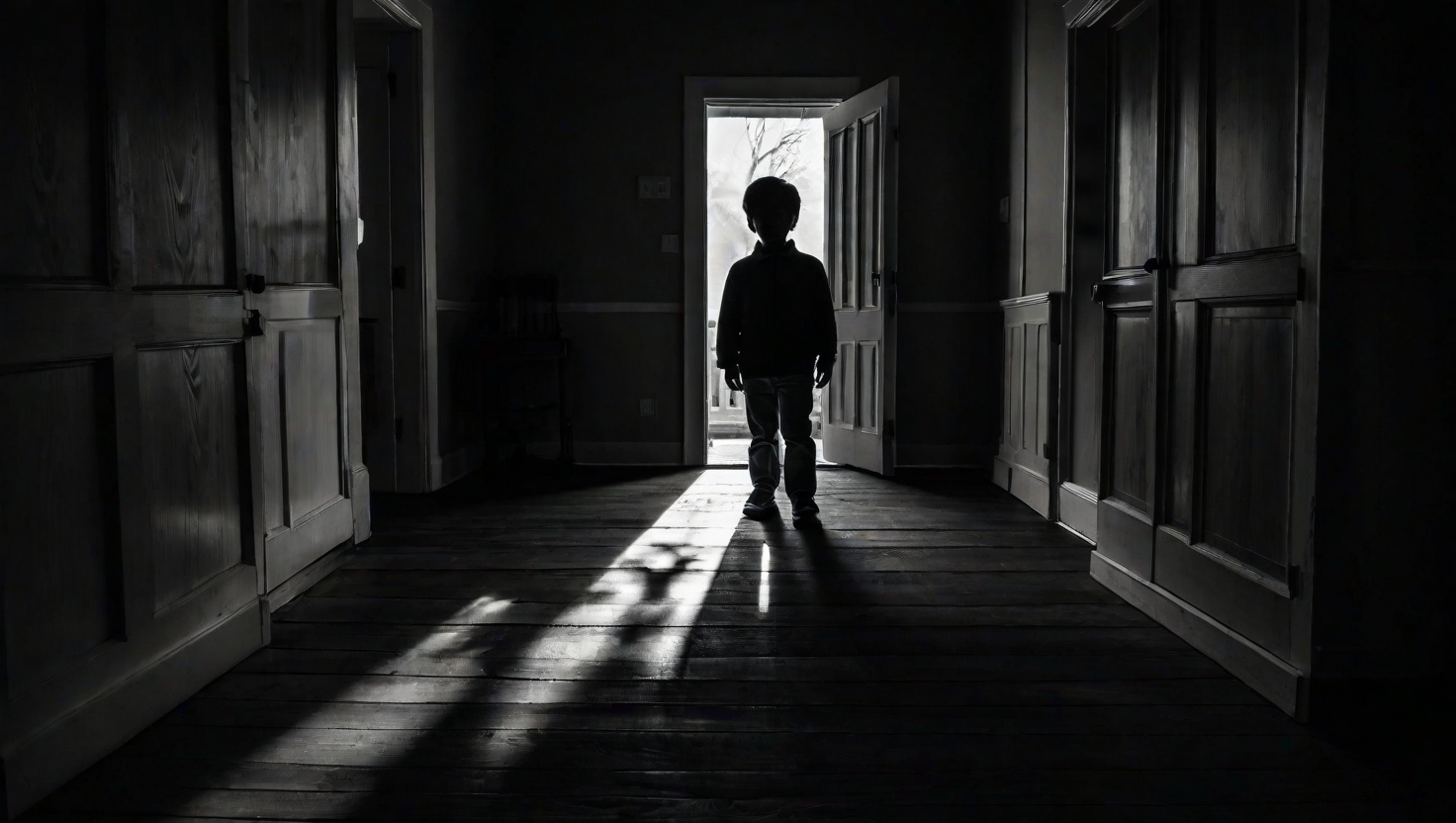
You're watching your seven-year-old refuse to go to school again, and your chest tightens with that familiar knot of helplessness. Their breathing gets shallow, their eyes dart around the room, and you find yourself mentally cataloging every parenting book you've read about childhood anxiety. You speak in your calmest voice, offer reassurances, maybe even try that breathing technique you learned online. But here's what's actually happening in that moment: your child's nervous system is reading yours, not your words. Their anxiety isn't a problem they developed in isolation — it's a response to an emotional atmosphere you've been unconsciously creating.
The research on emotional contagion shows us something most parents aren't prepared to hear. Children's developing nervous systems are designed to sync with their primary caregivers through a process called co-regulation. This means your internal state — your heart rate variability, your micro-expressions, the subtle tension in your voice — becomes their baseline normal. When you carry chronic worry about their future, unprocessed anxiety from your own childhood, or that low-grade panic about whether you're doing everything right as a parent, your child's system absorbs it all. They don't consciously choose this; it happens at a biological level, beneath awareness.
What makes this particularly challenging is that anxious parents often become hypervigilant about their child's emotional states, which creates more anxiety in the system. You notice every sign of distress, every hesitation, every moment of uncertainty, and your nervous system activates in response. Your child feels this activation and responds with their own anxiety, which triggers yours further. It becomes a feedback loop where everyone's trying to solve the wrong problem. You're focused on their behavior, their fears, their needs, while the actual source sits in your own unexamined internal landscape.
This isn't about blame or adding more guilt to an already overwhelming experience. It's about recognizing that children are emotional barometers for family systems. They reflect back the unspoken, unprocessed, and unacknowledged energy that exists in their environment. When you understand this dynamic, everything changes — not because you learn new techniques for managing your child, but because you finally know where to direct your attention.
Something I noticed about family patterns completely shifted how I see anxiety in households. The real work isn't always where we think it is.
Explore Here →The Biology of Borrowed Fear
Neuroscience gives us a clear picture of how anxiety moves between nervous systems, particularly from parent to child. Mirror neurons fire not just when we perform an action, but when we observe someone else performing that same action or experiencing that emotional state. This means your child's brain is constantly mirroring your internal experience, creating neural pathways that match your patterns of activation and response. When you feel that familiar surge of worry about their social skills, their academic performance, or their future happiness, their developing brain is literally learning to fire in the same patterns.
The polyvagal theory explains how our autonomic nervous systems communicate with each other through what's called neuroception — the subconscious detection of safety or threat. Your child's system is continuously scanning your system for cues about whether the world is safe or dangerous. If you carry chronic activation from your own unresolved fears, your child's neuroception reads this as evidence that vigilance is necessary. They don't think their way into anxiety; they absorb it through biological attunement. Their small system learns to match the baseline activation of your larger, more developed system.
What's particularly insidious is how this process happens beneath conscious awareness. You can say all the right things about safety and confidence while your nervous system broadcasts entirely different information. Your child responds to the deeper signal — the tension in your shoulders, the slight tightness in your voice, the way your breathing changes when you're worried about them. Their anxiety becomes a faithful reflection of your internal state, not their external circumstances. They're not broken or oversensitive; they're responding appropriately to the emotional data they're receiving.
Research on intergenerational trauma transmission shows us that anxiety patterns can pass from parent to child through epigenetic changes — actual modifications in gene expression that occur in response to chronic stress. This means the anxiety you absorbed from your own childhood, the fears you've never fully processed, the hypervigilance you developed as survival mechanisms, can literally become encoded in your child's biology. Their nervous system inherits not just your genetics, but your unresolved emotional patterns. They carry forward what you haven't been able to release.
The implications of this go far beyond individual parenting choices. It suggests that healing anxiety in children requires addressing the source of transmission — the parent's own nervous system activation and unprocessed fear. This is why traditional approaches that focus solely on the child's behavior or coping skills often fall short. You can teach a child breathing techniques while your own dysregulated system continues to signal danger. You can reassure them about safety while your unexamined fears create an atmosphere of chronic uncertainty. The child's anxiety persists because they're responding to accurate information about their emotional environment.
When I started examining my own nervous system activation around my family, everything made sense differently. Found some resources that helped me understand the invisible emotional currents we create.
Explore Here →
The Invisible Curriculum of Worry
Every interaction with your anxious child becomes a teaching moment, but not in the way you think. While you're consciously trying to model calm and confidence, your nervous system is providing an entirely different education. The way you hold your breath when they struggle with something new. The micro-expression of concern that crosses your face when they mention a social conflict. The subtle urgency in your voice when you're trying too hard to reassure them. All of this becomes part of their curriculum about how the world works and what requires vigilance.
Children are exceptionally skilled at reading subtext because their survival depends on understanding the emotional climate of their caregivers. They learn to scan for signs of distress, to monitor your activation levels, to adjust their behavior based on your internal state. When you're anxious about their anxiety, they learn that their emotional experience is dangerous or wrong. When you try to fix their fears, they learn that fear itself is a problem to be solved rather than information to be felt and processed. They develop anxiety about having anxiety, creating layers of self-judgment on top of their natural emotional responses.
The paradox is that your well-intentioned efforts to help often reinforce the very patterns you're trying to change. When you rush to comfort them every time they show signs of distress, your nervous system activation in that moment communicates that their distress is indeed dangerous and requires immediate intervention. When you anticipate their anxiety and try to prevent situations that might trigger them, you're unconsciously teaching them that the world is full of threats that require your protection. Your protective instincts, driven by your own anxiety, become evidence to their system that they can't handle life independently.
This creates what psychologists call "anxiety sensitization" — a process where both parent and child become increasingly reactive to signs of emotional distress. You start noticing smaller and smaller signals of their anxiety, which triggers your own protective responses, which increases their sensitivity to their internal states. The child learns to fear their own emotional responses because they've learned that these responses cause distress in their primary attachment figure. They begin monitoring themselves the way you monitor them, creating an internal parent-child dynamic that mirrors the external one.
The most challenging aspect of this pattern is that it often masquerades as closeness or intuitive parenting. You might pride yourself on being attuned to your child's needs, on sensing their emotional states before they can articulate them. But there's a difference between healthy attunement and anxious hypervigilance. Healthy attunement involves staying regulated in your own system while offering co-regulation to your child. Anxious hypervigilance involves your nervous system becoming activated by their activation, creating emotional fusion rather than genuine connection. Your child learns to carry responsibility for your emotional state, which becomes the foundation for their own anxiety patterns.
Breaking the Cycle Through Self-Regulation
The path forward doesn't involve learning new parenting strategies or finding better ways to manage your child's anxiety. It requires developing awareness of your own nervous system activation and learning to regulate yourself independently of their emotional state. This is profoundly different from what most anxious parents have been taught to do. Instead of focusing outward on your child's needs and responses, you begin turning attention inward to your own patterns of activation, your inherited fear responses, your unconscious beliefs about safety and danger.
Self-regulation in this context means learning to notice when your nervous system becomes activated by your child's distress without immediately moving into fix-or-rescue mode. It means catching that moment when their tears or fears trigger your own childhood memories of feeling unsafe or unprotected. It means recognizing when your desire to help them is actually your system trying to regulate itself through controlling their experience. True regulation happens when you can remain present with their emotional experience without needing to change it.
This requires examining the stories you tell yourself about your child's anxiety. Many anxious parents carry narratives about their child being "sensitive" or "prone to worry" or needing extra support, but these stories often reflect the parent's own unprocessed fears about emotional intensity. When you believe your child can't handle difficult emotions, you're projecting your own relationship with emotional overwhelm. When you anticipate their struggles, you're often reliving your own childhood experiences of not receiving adequate co-regulation from your caregivers.
The practice becomes learning to separate your emotional experience from theirs. This doesn't mean becoming disconnected or uninvolved; it means maintaining your own emotional equilibrium while offering them a regulated nervous system to attune to. When they're anxious and you remain genuinely calm — not performed calm, but authentic regulation — their system begins to learn new patterns. They experience that anxiety doesn't require immediate rescue or fixing. They learn that emotions can be felt and processed without creating chaos in their relationships.
What's particularly powerful about this approach is how it addresses the root transmission rather than managing symptoms. When your nervous system genuinely shifts from chronic activation to regulation, your child's system naturally begins to recalibrate. They no longer receive constant signals about threat and danger. The emotional atmosphere of your home changes at a biological level. Their anxiety wasn't their creation, and their healing doesn't require their conscious effort — it happens through nervous system co-regulation with a truly regulated parent.
The most profound shifts occur when parents begin doing their own inner work around the anxiety patterns they inherited from their childhood. This might involve recognizing how your own parents' unprocessed fears shaped your nervous system development. It might mean grieving the hypervigilance you developed as a survival strategy. It often requires acknowledging the ways your child's anxiety triggers your own unhealed places and learning to tend to those places independently of your child's behavior.
Your child's anxiety tells a story about the emotional inheritance they've received, the nervous system patterns they've absorbed, the unspoken fears that live in your family system. They're not broken or deficient; they're responding intelligently to their environment. Their anxiety is information about what needs healing — not in them, but in the larger system they're part of. When you understand this, everything changes. Not because you learn to manage their emotions better, but because you finally know where the real work needs to happen.
The most liberating realization for anxious parents is that their child's healing doesn't depend on perfect parenting or finding the right interventions. It depends on the parent's willingness to examine their own nervous system, to process their own unresolved fears, to develop genuine regulation rather than performed calm. Your child's anxiety is not their problem to solve — it's a reflection of patterns that can shift when you address the source of transmission.
This doesn't happen overnight, and it doesn't require you to become a perfect parent. It requires you to become curious about your own internal landscape, to notice your activation patterns, to develop compassion for the fears you inherited and the ways you've tried to protect your child from your own unhealed places. When you begin this work, your child's system receives different information. They learn new possibilities for being in the world, not through your words or strategies, but through the lived experience of connecting with a regulated nervous system.
The invitation is to stop trying to fix your child's anxiety and start exploring your own. To recognize that their emotional experience is a mirror, not a problem. To understand that the most powerful gift you can give them is your own healing, your own regulation, your own willingness to feel and process the fears you've been unconsciously passing along. Their anxiety is not their problem — it's your opportunity to break generational patterns and offer them something different.
Ready to look at the anxiety patterns you might be unconsciously modeling? There's deeper work available for parents willing to turn inward first.
Explore Here →What if the anxiety you're trying to heal in your child is actually asking you to turn inward first?